The license fee on the invoice is the smallest number in the equation. Here's why.
There's a moment every sales leader knows. You're comparing dialer platforms, the spreadsheet looks clean, and one vendor comes in $50/month per rep cheaper than the other. The decision feels obvious. You pick the cheaper option, you roll it out, and three months later nobody can explain why connect rates are flat and pipeline is thinning.
The problem isn't that you made a bad call. The problem is that you were looking at the wrong number.
The Illusion of Savings
Let's use a real example. A sales leader — we'll call him Mario — recently told us he was leaning toward Aircall. His reasoning was straightforward:
"Biggest reason is their cost right now, someone in our sales org has used it prior and terms. Plus they are invested in by HubSpot and that is our main CRM right now."
Fair enough. Aircall is a known brand, it integrates with HubSpot, and on paper the per-rep license looks cheaper. But here's what the spreadsheet doesn't capture: by the time you replicate the feature set of a purpose-built outbound dialer, the price gap nearly disappears.
Add the Power Dialer. Add Voicemail Drop. Provision enough local phone numbers to match a true local-presence strategy. Now you're at roughly $100/rep — the same ballpark as Ring.io.
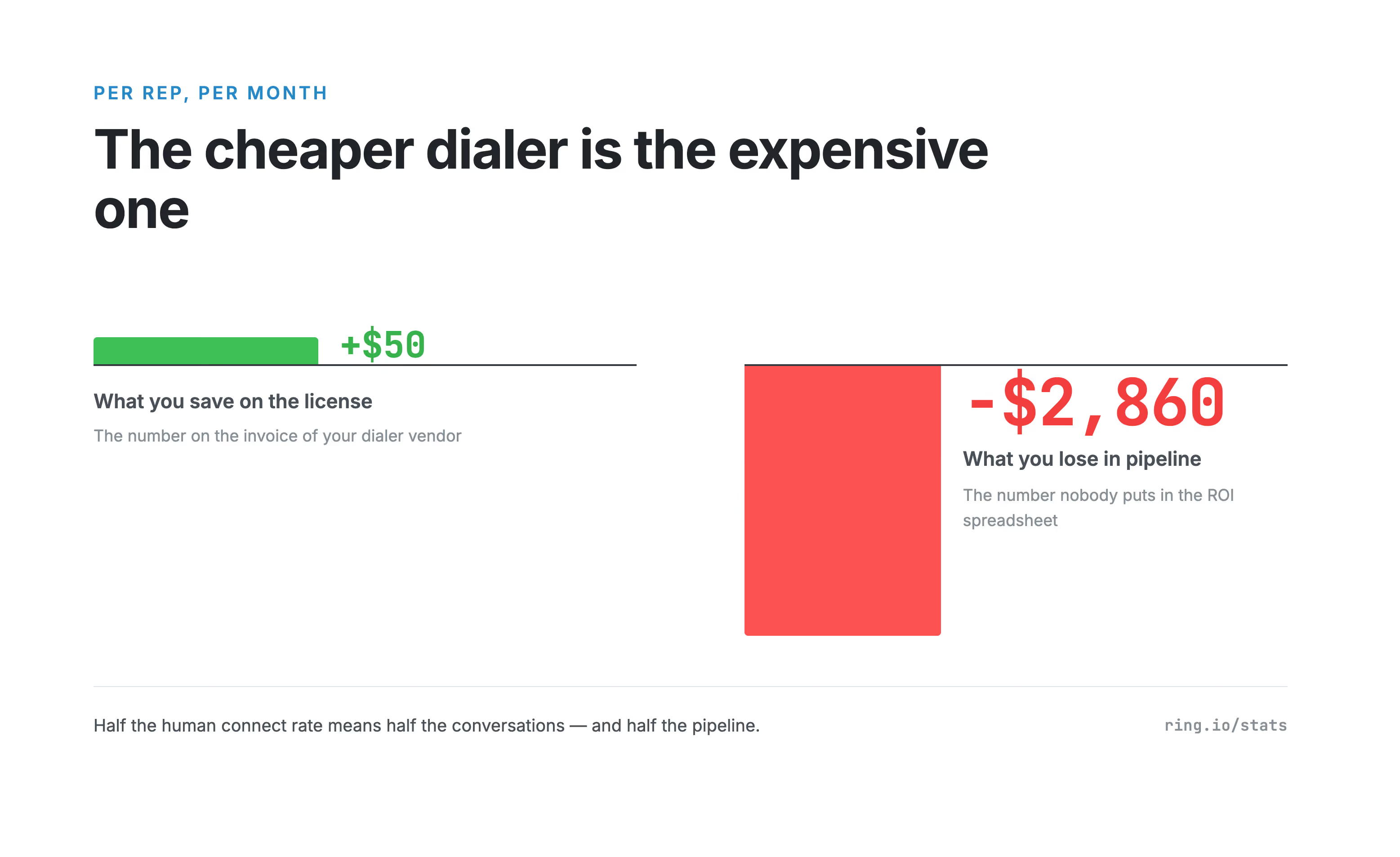
So the $50/month savings? It was never really there.
The Number You Can't See on the Invoice
Here's where it gets expensive.
A dialer's job isn't to make calls. A dialer's job is to reach humans. Every call that goes to voicemail, gets flagged as spam, or rings dead on a burned number is wasted effort — and wasted effort has a dollar value attached to it.
We track this obsessively. Our live stats page shows that Ring.io's median human connect rate currently sits at 11.7%, compared to an industry average of 5.4%. That's a 2.2× multiplier — same call volume, more than twice the real conversations.
The email correspondence that inspired this post cited 12.8%. The live number fluctuates slightly day to day, but the story is consistent: Ring.io roughly doubles your connect rate.
That metric — human connect rate — is the true cost of your dialer solution. Not the license fee. The connect rate. Because it determines how many actual conversations each rep has per day, and conversations are what generate pipeline.
The Spam-Number Tax
There's a second hidden cost that doesn't show up in any vendor's pricing page: the manual labor of managing phone number reputation.
With Aircall, local presence means you must buy and manage phone numbers manually. You purchase a pool of numbers, assign them to reps, and hope for the best. When a number gets labeled as spam — and it will — someone on your team has to:
Detect that the number is flagged
Return the number to the carrier
Purchase a replacement
Hope the new number is clean to begin with
How many numbers will you buy? A few dozen? A few hundred? For a team of 20 reps across 10 area codes, you're already managing hundreds of numbers — and the moment one gets flagged, that rep's connect rate for the day tanks until someone notices and swaps it.
"It gets old very soon."
With Ring.io's RingLocal, none of that exists. Every rep has immediate access to a pool of 10,000+ clean numbers that is automatically monitored for spam labeling and refreshed every night. Your reps have a number selection 100× bigger than what you'd manually provision on Aircall — and you have nothing to manage. It's all done for you.
The Math That Should Be in Your Vendor Evaluation
Let's walk through the actual economics, using the same numbers from the real conversation that prompted this post.
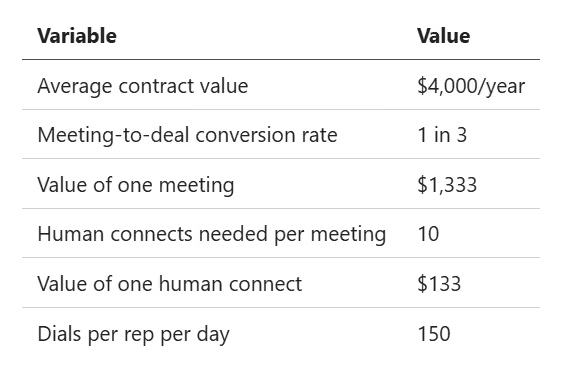
Assumptions
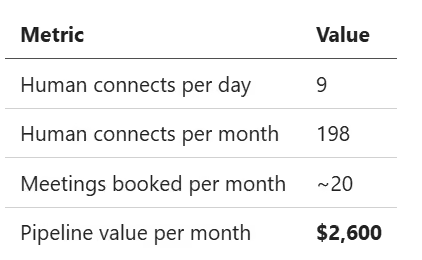
Scenario A: Aircall at 6% Human Connect Rate
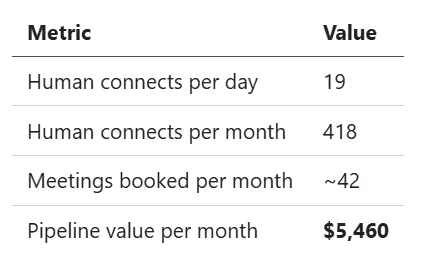
Scenario B: Ring.io at 12.8% Human Connect Rate
The Difference
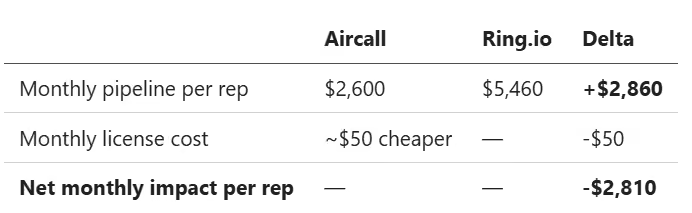
The "savings" of going with the cheaper dialer actually costs you $2,860 more per rep per month.
That's not a rounding error. That's the difference between a team that makes quota and a team that doesn't.
Why This Keeps Happening
The reason teams fall into this trap is structural. The person evaluating vendors often sees the license cost but doesn't have visibility into connect rates — because they haven't run both platforms side by side. And by the time the lower connect rate shows up in the pipeline numbers, the decision has already been made, the contracts are signed, and the team has been trained on the new tool.
Switching costs become the excuse to stay.
This is exactly why companies like Townsquare Interactive — use Ring.io instead of Aircall. They did the math. They saw that the per-license savings evaporate the moment you account for the connect-rate gap, and they chose the platform that puts more humans on the line.
The Question to Ask Before You Sign
Before you commit to a dialer platform, ask your vendor these three questions:
What is your median human connect rate, and can you prove it with live data? (Not a case study. Live, refreshed stats.)
How are phone numbers managed when they get flagged as spam? (If the answer involves manual swaps, that's a hidden cost.)
How many local numbers does each rep have access to, and how fresh is the pool? (A few dozen manually managed numbers vs. 10,000+ auto-refreshed numbers is not the same product.)
If your vendor can't answer these questions with confidence, the $50/month you're saving isn't savings. It's the most expensive line item in your sales stack.
Ring.io's live human connect rate stats are publicly available at ring.io/stats, refreshed daily. See for yourself.
Carriers score every number you dial. Nobody at the carrier will talk to your sales manager
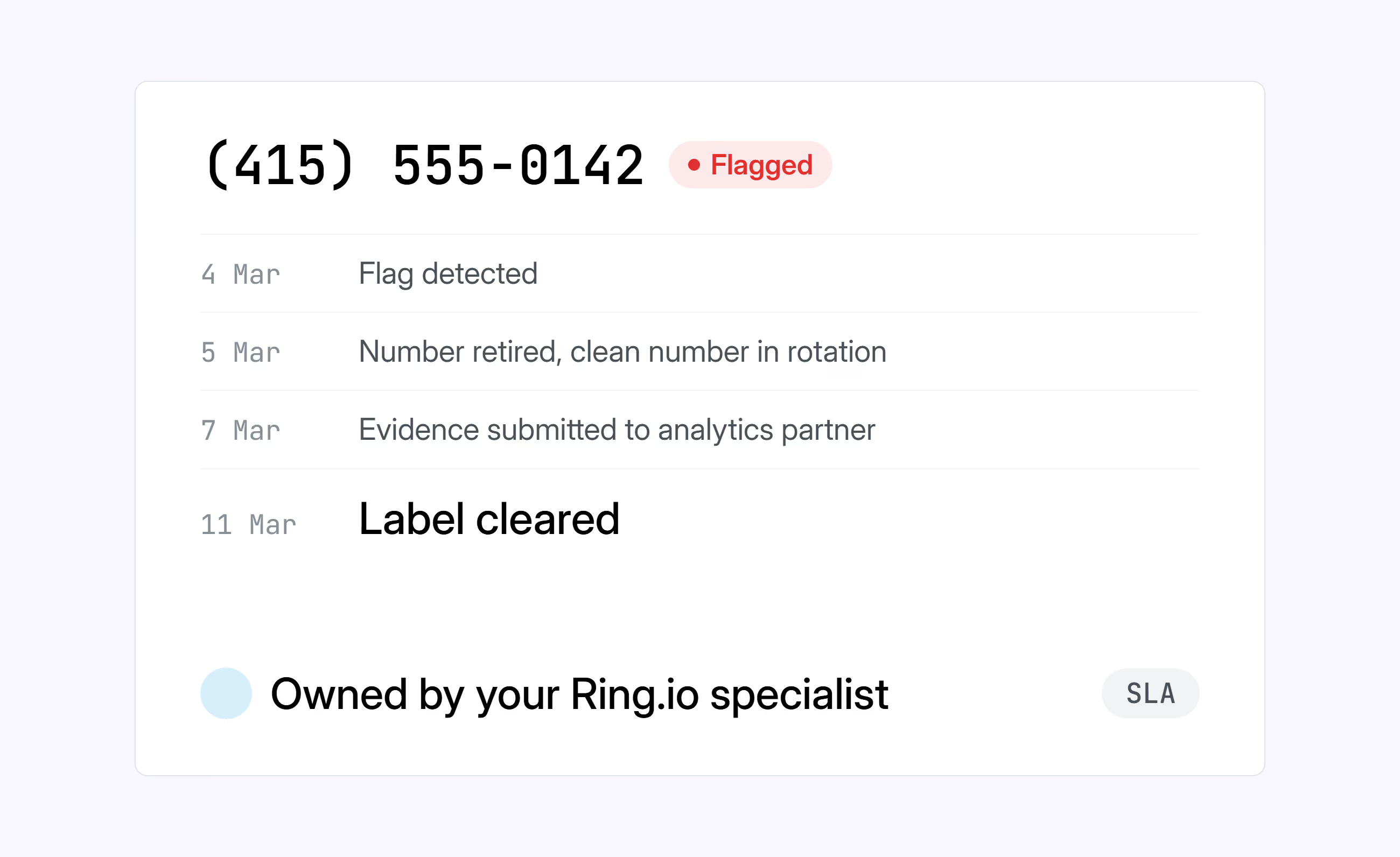
AT&T, Verizon and T-Mobile lean on analytics engines like Hiya, TNS and First Orion to score outbound numbers, and those engines read call volume, short calls and a handful of user reports as the signature of a nuisance caller - which is also, unfortunately, the signature of a sales team doing its job. Getting a label reviewed means knowing which engine applied it, what evidence it takes to have it cleared, and who to send that evidence to. Bulletproof Caller ID puts that work with someone whose job it is: your numbers are registered and maintained, flags are chased through to a resolution, and the reporting comes to you rather than being something you go looking for.
Channels are not created equally. You might discover that one is working better for your prospects or customers than other. We hand-picked channels and their combinations to deliver the percentage of engagement you can close your quota with.
The AI opens the call. You take it from qualified.
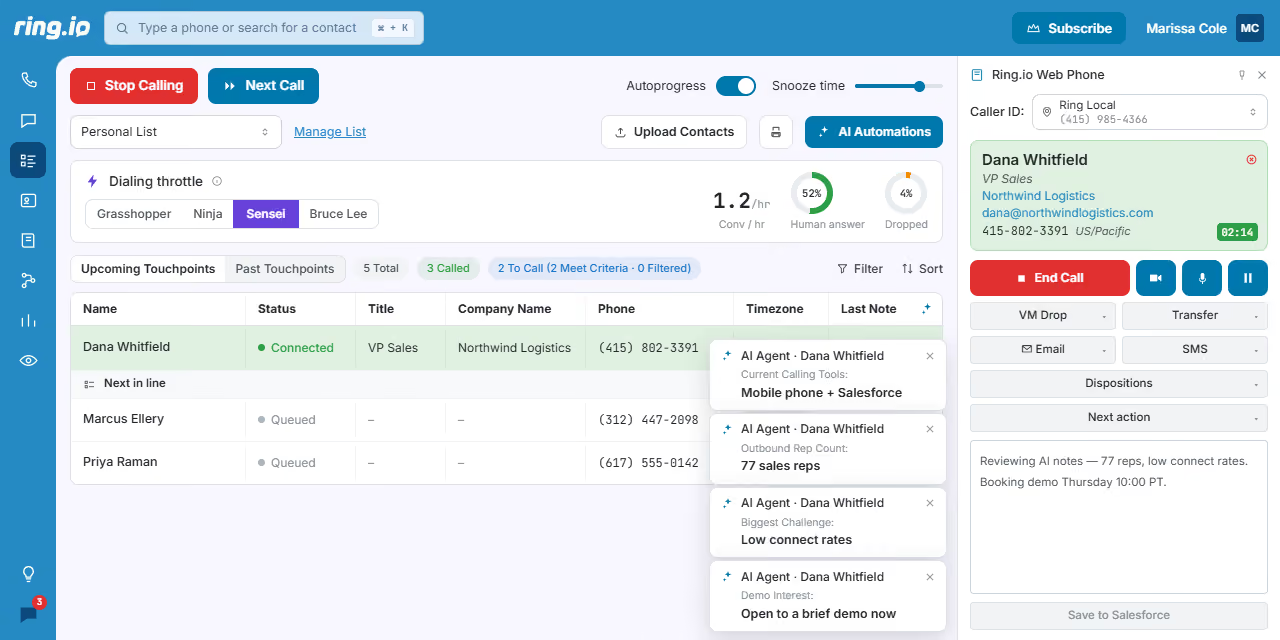
Our new AI Parallel Dialer calls several contacts at once and lets an AI agent open the call and qualify it. Then it hands you the conversation. Here's why we drew the line there.
Why Is Everybody Talking About Customer Loyalty?
Keeping customers is way cheaper and easier than finding new ones, and that's why businesses love customer loyalty programs. Using software to manage customer relationships helps businesses give a personal touch, making customers feel valued and more likely to stick around.
5 Ways To Win Big With Sales Technology
To really benefit from sales technology, make sure it works well with your customer management system and hire people who are good with tech. Use the data to keep improving, talk to customers in ways they like, and automate your marketing to get the best leads.